
Probation Violation in Washington: What Happens at the Hearing and What Options Exist
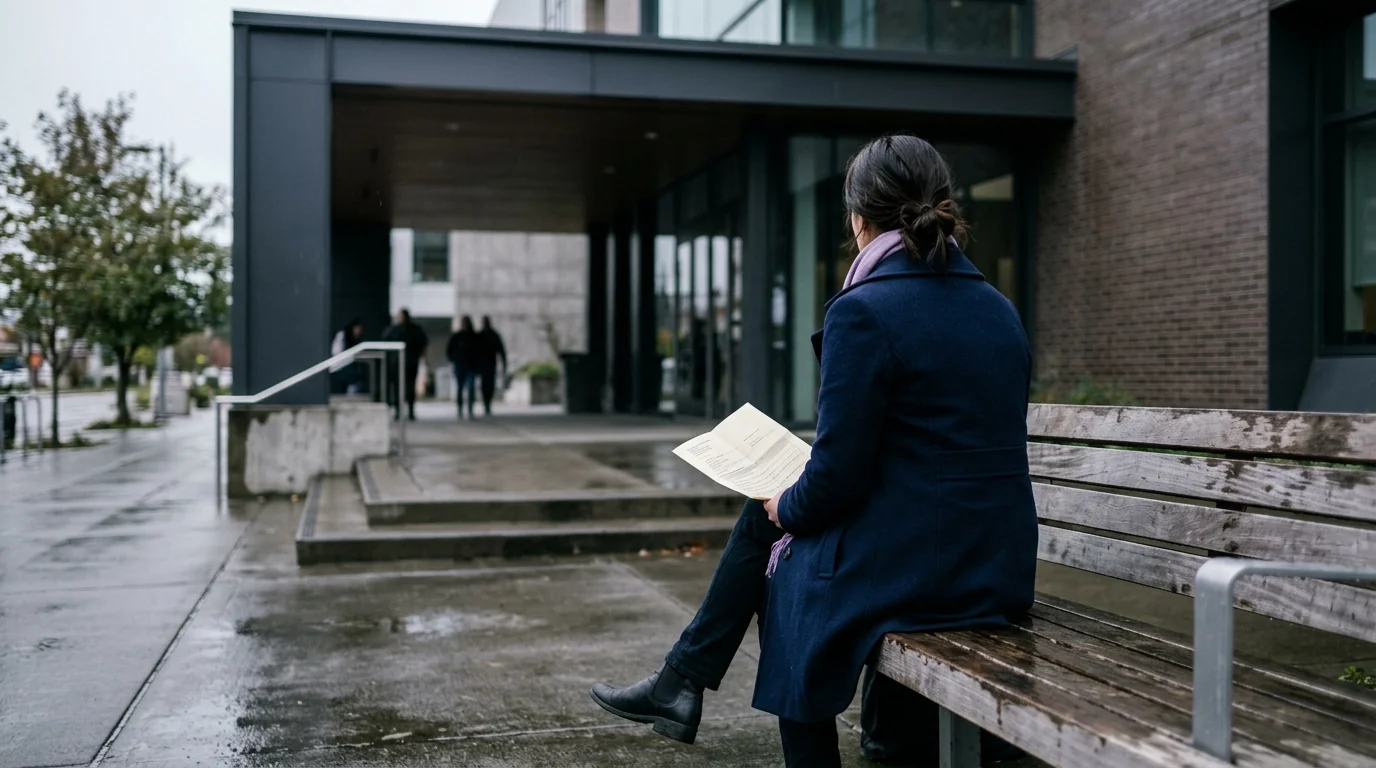
What happens if you violate probation in Washington depends on a hearing or a review, because a probation violation isn’t decided automatically. In district and municipal court, the judge can’t revoke or change your probation without a hearing you attend, in person or remotely, unless both sides agree, under CrRLJ 7.6(c). On felony community custody, a serious violation goes to a hearing before a judge or a Department of Corrections hearing officer.
What can follow depends on which track you’re on. In district or municipal court, the judge can impose the jail time that was suspended at sentencing, but never more than the original sentence, with credit for time served. On ordinary felony community custody, a court can impose up to 60 days per violation and DOC up to 30. Those are ceilings, not predictions, and sentencing alternatives and some special sentences follow their own rules.
Below: how to tell which track you’re on, what counts as a violation, how the hearing works on each track, what can be imposed, the special rule for DUI probation, and your options.
Torrone’s Takeaways
- Whether a judge or DOC decides a violation depends on your sentence and on whether DOC supervises you.
- In district or municipal court, a revoked suspended sentence can’t exceed the original sentence, and you get credit for time served.
- On ordinary felony community custody, a court can impose up to 60 days per violation and DOC up to 30 days per hearing.
- In district and municipal court, you have a right to a lawyer, appointed if you can’t afford one, and a hearing within two weeks of arrest if you’re held.
- Unpaid fines can’t be sanctioned unless a court finds, after a hearing, that you have the current ability to pay and refuse.
- On DUI probation, each violation of five listed conditions carries 30 days the judge can’t suspend.
Table of Contents
- Torrone’s Takeaways
- Probation or Community Custody: Which One You’re On Decides Who Handles the Violation
- What Counts as a Violation: Missed Check-Ins, Failed Tests, Unpaid Fines, and New Charges
- What Happens at a Probation Violation Hearing in District or Municipal Court
- Felony Community Custody Violations: A Judge or a DOC Hearing Officer
- What the Court or DOC Can Impose for a Probation Violation
- DUI Probation Violations and the Mandatory 30 Days
- Your Options, and What to Bring to an Attorney
- FAQ
Probation or Community Custody: Which One You’re On Decides Who Handles the Violation
Not everyone on a felony sentence has a community corrections officer. Under RCW 9.94A.501, DOC must supervise specific groups, including people on felony community custody classified as high risk to reoffend, and “is not authorized to” supervise anyone else. Under RCW 9.94A.6332, in the ordinary case, if DOC supervises you, DOC handles violation sanctions, and if it doesn’t, the court does. Sentencing alternatives, such as the special sex offender and drug offender alternatives, and sentences overseen by the Indeterminate Sentence Review Board have their own rules.
District and municipal court probation covers misdemeanors and gross misdemeanors, the cases where the court suspends or defers jail time on conditions. Under RCW 3.66.068, district court probation can last up to two years, or up to five for a domestic violence offense or a DUI sentenced under RCW 46.61.5055. City municipal courts work under the same limits in RCW 3.50.330. In Pierce County, District Court Probation supervises mostly DUI and domestic violence cases, plus other misdemeanors, and reports probationers’ behavior to the judges. If you’re not sure whether your case was a felony or a misdemeanor, start there.
Felony community custody follows a prison or jail sentence. Under RCW 9.94A.701, the term for a prison sentence is generally one year, 18 months or three years depending on the offense. After a jail sentence of a year or less for certain offenses, RCW 9.94A.702 allows up to one year.
| District or municipal court probation | Felony community custody | |
|---|---|---|
| Who supervises | The court’s probation department, or the court itself | A DOC officer if RCW 9.94A.501 requires it; otherwise no officer |
| How long | Up to 2 years, or 5 for DV or DUI | Generally 1 year, 18 months or 3 years |
| Who decides a violation | The judge | DOC if DOC supervises; otherwise the judge |
| Hearing rules | CrRLJ 7.6 | RCW 9.94A.737 and WAC 137-104 for DOC, or RCW 9.94A.6333 for the court |
| Jail ceiling | The original suspended sentence | Ordinarily 60 days per violation by a court, 30 per hearing by DOC |
If you’re not sure which column you’re in, the judgment and sentence answers it.
What Counts as a Violation: Missed Check-Ins, Failed Tests, Unpaid Fines, and New Charges
A violation is breaking a condition in your order, and the conditions are what your judgment and sentence and any supervision instructions say. For community custody, DOC’s rules define a violation as willful noncompliance, and WAC 137-104-021 requires DOC to confirm the alleged violation was willful and that you had a chance to respond.
Missed Check-Ins
Reporting as directed is a standard condition of community custody under RCW 9.94A.703, one the court can waive, and RCW 9.94A.704 requires DOC to instruct everyone it supervises to report as directed. In district and municipal court, reporting requirements come from the probation order itself.
Failed or Missed Tests
Not using controlled substances without a prescription is a standard, waivable community custody condition under RCW 9.94A.703. Other testing requirements come from the judgment or from conditions and instructions DOC lawfully adds. DUI probation has its own rule, covered below.
Unpaid Fines and Costs
Money is different. Under RCW 9.94A.6333(3), the court may not sanction a failure to pay legal financial obligations unless it finds, after a hearing and on the record, that the failure was willful, meaning you have the current ability to pay but refuse. A person who is indigent is presumed unable to pay. If nonpayment wasn’t willful, the court may change the payment terms, reduce or waive amounts other than restitution, or convert them to community restitution hours, and for an indigent person it has to. RCW 10.01.180 applies the same willfulness rule to fines and costs generally.
A New Charge
A new charge is its own case, separate from the violation. On community custody, under RCW 9.94A.631, if an officer has reason to believe you’ve violated a condition of your sentence, the officer may arrest you without a warrant pending a decision by the court or DOC. For a new crime committed in the officer’s presence, DOC can hold you up to three days pending a charging decision, or 30 days if the underlying offense is on a list of serious felonies. When both are true, a listed underlying felony and new criminal behavior, RCW 9.94A.737(5) has DOC hold the person until charges are filed, the prosecutor declines in writing, or the sanction runs out.
A missed appointment and an unpaid fine aren’t treated the same way. The statute puts a willfulness finding in front of any sanction for nonpayment.
What Happens at a Probation Violation Hearing in District or Municipal Court
The clock starts fast. Under CrRLJ 7.6, after an arrest for an alleged violation, the court has to release you within 24 hours or hold a hearing on release the next judicial day. If you’re held, the probation hearing has to happen within two weeks of arrest, unless you asked for more time. If it isn’t set in that window, you’re released pending the hearing.
From there, the rule lays out your rights in order:
- You get advance notice of what the violation is alleged to be, plus discovery of the evidence, including the names and contact information of witnesses.
- You have the right to a lawyer, and one is appointed if you can’t afford one. Our misdemeanor defense lawyers handle these hearings.
- If you want to confront the witnesses against you, give notice at least three days before the hearing. Then you have that right unless the court specifically finds good cause not to allow it. At the hearing, you can present evidence and cross-examine witnesses.
- The court can’t revoke or modify probation without a hearing you attend in person, remotely, or through counsel as the court allows, or a stipulation. If it revokes, it has to state its grounds on the record.
In Pierce County, District Court Probation reports to the judges on how probationers are doing, so a probation violation in Pierce County District Court can start with that department’s report. The three-day notice is the step to remember if you want the witnesses in the room.
Felony Community Custody Violations: A Judge or a DOC Hearing Officer
The two felony hearings work differently. A DOC hearing is run by a hearing officer, and under WAC 137-104-060 you may request counsel only “as established by department policy.” The court route is a show-cause hearing in front of a judge.
When the Court Decides
In the ordinary case where DOC isn’t supervising, the court handles violations under RCW 9.94A.6333. The state or the court starts it, the court orders you to show cause why you shouldn’t be punished, and it can issue a summons or a warrant. The state has the burden of showing noncompliance by a preponderance of the evidence, which is a lower bar than proof beyond a reasonable doubt at trial. Time held while waiting for the hearing counts against any confinement the court orders.
Separately, Pierce County Superior Court’s probation violation page describes how its own violation docket works. DOC gathers information and makes a recommendation to the prosecutor, who prepares the petition and may seek a warrant. At the first appearance, an agreed resolution is signed or a later hearing is set on the Criminal Division probation violation docket, where the judge reviews documents, hears any testimony, and decides. Pierce County’s assigned counsel office says one of its attorneys is present at review hearings for people alleged to be out of compliance.
When DOC Decides
When DOC supervises you, RCW 9.94A.737 has DOC handle the violation and notify you in writing of the process. Violations are either low level or high level:
- A low-level violation can bring nonconfinement sanctions or up to three days in confinement, after a chance to respond, without a formal hearing. A confinement sanction can be appealed in writing within seven days.
- A high-level violation entitles you to a hearing before any sanction, and you can be held until then, with credit for that time. After five sanctioned low-level violations, later ones may be treated as high level.
At a high-level hearing, you get written notice of the alleged violation and the evidence. The hearing is held within five business days of that notice if you’re in confinement and 15 if you’re not, and never less than 24 hours after notice. You can be present, testify or stay silent, call witnesses, present documents, question witnesses, and get a written decision. Under WAC 137-104-050, DOC must prove each violation by a preponderance of the evidence, and hearsay may be received. Under RCW 9.94A.737, the hearing officer can’t rely on unconfirmed or unconfirmable allegations to find a violation, and hearing officers report through a chain of command separate from community corrections officers. An appeal goes in writing within seven calendar days to a three-person panel under WAC 137-104-080.
Side by side, the court route puts a judge in charge, and the DOC route puts a hearing officer in charge and doesn’t guarantee a lawyer.
What the Court or DOC Can Impose for a Probation Violation
These are the most a court or DOC may impose for an ordinary violation. No public source we found says how often any of them is actually imposed.
In district and municipal court, under RCW 3.66.069, a revoked suspension or deferral lets the court impose the suspended sentence or any unserved part of it. “In no case shall the court impose a sentence greater than the original sentence,” with credit for time served and money paid. City municipal courts have the same limit under RCW 3.50.340. The original sentence is capped by the offense, generally under RCW 9A.20.021 at 364 days for a gross misdemeanor and 90 days for a misdemeanor, though some offenses set their own limits. The court can also modify the order before probation ends.
On the felony track, RCW 9.94A.633(1) allows up to 60 days of confinement per violation by a court, and DOC up to 30 per hearing, with three days the most for a DOC low-level sanction. Court-imposed sanctions under that subsection are served in a county facility. Instead of confinement, the statute lists:
- Work release, home detention with electronic monitoring, or work crew
- Community restitution
- Inpatient treatment
- Daily reporting or a curfew
- Educational or counseling sessions, and other community-based sanctions
If the paperwork names a number, compare it to the ceiling for your track.
DUI Probation Violations and the Mandatory 30 Days
For five specific DUI probation conditions, the law sets a floor, not just a ceiling. When a DUI sentence includes jail of up to 364 days, RCW 46.61.5055(11) requires the court to suspend part of it for up to five years with mandatory conditions. For each violation of these, “the court shall order the convicted person to be confined for 30 days, which shall not be suspended or deferred”:
- Driving in Washington without a valid license.
- Driving in Washington without proof of liability insurance or other financial responsibility.
- Driving or being in physical control in Washington with an alcohol concentration of 0.08 or more, or a THC concentration of 5.00 nanograms per milliliter of whole blood or more, within two hours after driving.
- Refusing a breath or blood test requested by an officer with reasonable grounds to believe you were driving or in physical control while under the influence.
- Driving in Washington without a functioning ignition interlock device the Department of Licensing requires.
Each incident also brings a 30-day license suspension or extension, with a narrow exception for one kind of suspended-license violation that’s cured within 30 days. A violation of any other DUI probation condition, such as a missed treatment session, isn’t on this list, and it follows the ordinary district court process and ceilings above. For the DUI case itself, see our guide to DUI defense in Washington.
The list is short and specific, so the first question is whether the alleged violation is on it.
Your Options, and What to Bring to an Attorney
The basic choice is whether to agree or contest. Each track has a way to agree:
- In district and municipal court, CrRLJ 7.6(c) allows probation to be modified or revoked on a stipulation of the parties.
- In Pierce County Superior Court, an agreed resolution can be signed at the first appearance.
- With DOC, under WAC 137-104-051, a person alleged to have a high-level violation can waive the hearing and propose a sanction negotiated with DOC. A hearing officer checks that the admission and waiver are knowing and voluntary and may reject the agreement. Agreeing waives the hearing and the appeal.
Contesting means using the hearing rights described above. For an unpaid-fine violation, the question is willfulness. For a DOC finding, there’s the seven-day appeal.
Either way, these documents answer the questions a hearing asks:
- The judgment and sentence and every order setting conditions
- The violation notice, petition, report or warrant paperwork, and the hearing date
- Proof of compliance: treatment enrollment or completion letters, test results, payment receipts or payment plan records, community service logs
- Anything that explains a missed obligation: medical or hospital records, work schedules, jail records, messages with your probation officer
- The charging document or police report for any new charge
- Income and expense information if the issue is unpaid fines
If you’re facing a probation violation in Pierce County, you can schedule a free, confidential consultation with our criminal defense team. We’ll read the order and the violation report with you and explain which track you’re on, what hearing you’re facing, and what the rules allow.
FAQ
1. Can my probation officer arrest me without a warrant in Washington?
Yes, in some situations. Under RCW 9.94A.631(1), if a community corrections officer has reason to believe a person on community custody has violated a condition of the sentence, the officer may arrest without a warrant, pending a decision by the court or DOC. Whether an arrest happens in a given case depends on the facts and the officer’s judgment.
2. Can I ask the court to change a probation condition I can’t meet?
On felony community custody, you can ask the sentencing court to modify a court-imposed condition, generally once every 12 months. Under RCW 9.94A.703, you have to prove by a preponderance of the evidence that circumstances have changed so much that the condition is no longer needed for community safety, and time without a violation isn’t enough on its own. Conditions DOC adds can be challenged through an administrative review requested within 10 business days of receiving notice, under RCW 9.94A.704.
3. What happens if I miss a probation court date?
The probation term stops running until you appear before the court on the record. RCW 3.66.068(3) says so for district court, and RCW 3.50.330 has the same rule for city municipal courts.
4. Is violating a deferred prosecution the same as a probation violation?
No. It’s a separate hearing under its own statute. Under RCW 10.05.090, when a breach of the treatment plan is reported, the court must hold a hearing, the person can present evidence, and the court either continues the treatment plan or removes the person from deferred prosecution and enters judgment.
This article is attorney advertising and shares general information only, not legal advice. Reading it or contacting Melvin & Torrone, PLLP does not create an attorney-client relationship. Every situation is different, so talk with a licensed attorney about yours.
Chris Torrone
Founding Partner, Melvin & Torrone PLLP
Chris Torrone is a dedicated advocate for clients facing family crises and criminal charges. With 20 years of experience practicing in Pierce County courts, Chris has built a reputation for meticulous case preparation and creative problem-solving in high-stakes litigation.