
Protection Order Defense in Washington: What to Do When One Is Filed Against You
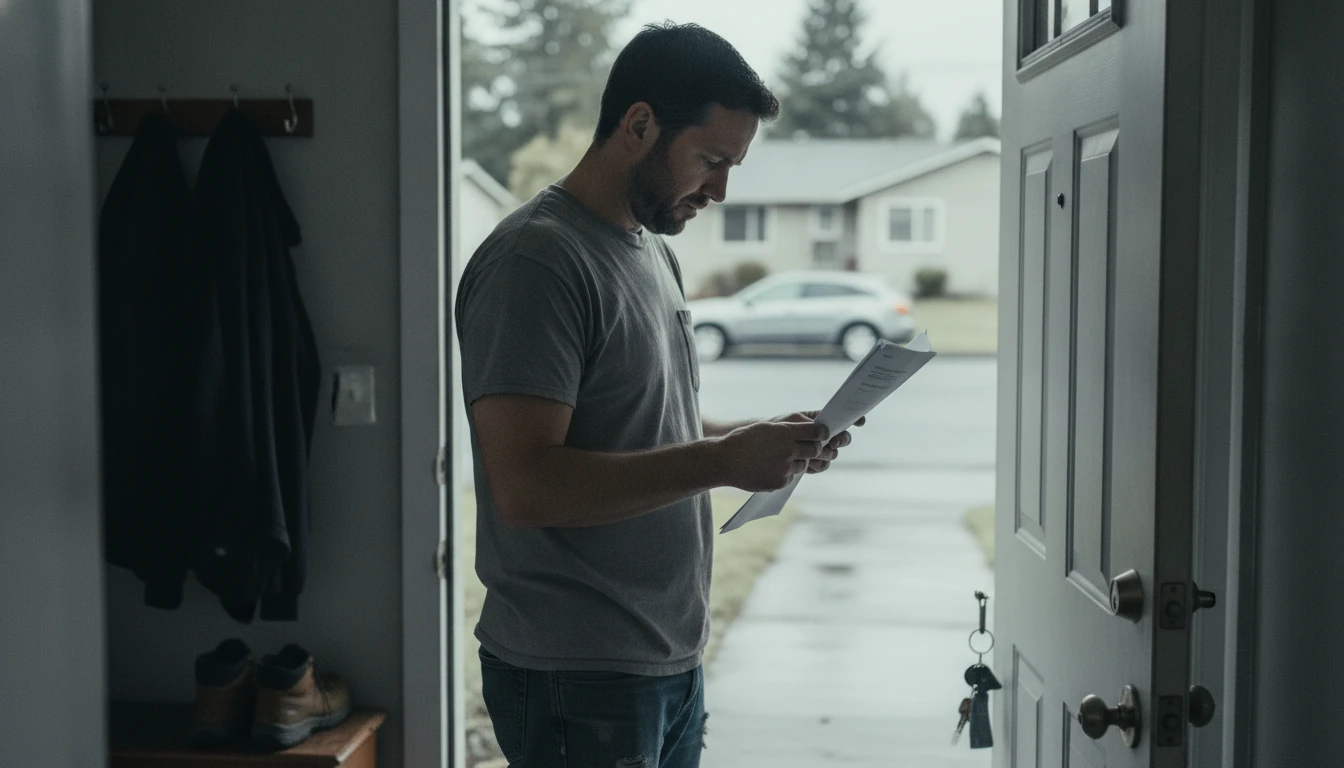
Somebody handed you an envelope, and inside it is a court order with your name on it, a list of things you can no longer do, and a hearing date about two weeks out. Those restrictions are already in force. They took effect the moment you were served, before you got to say a word to anyone.
If you’re looking for protection order defense in Washington, start with the distinction that runs through everything else. A protection order is a civil order, not a criminal charge, and violating it is a crime. Nobody arrested you. But if you break a single term of that order, even by accident, even at the other person’s invitation, you can be arrested.
I’m Chris Torrone, and I practice family law and criminal defense in Tacoma, which is how I know those problems tend to arrive in the same week. What follows is the clock, the hearing, and the consequences, with the statute behind each one.
Table of Contents
- What to Do in the First Days After You Are Served
- The Six Protection Orders Washington Courts Can Issue
- How an Order Gets Issued Before You Say a Word
- What the Order Can Already Do, Including to Your Firearms
- What a Protection Order Can and Cannot Do About Your Own Children
- What Actually Happens at the Full Hearing
- Contested Allegations and What the Court Is Allowed to Weigh
- Violating the Order Is a Separate Crime
- If the Order Is Granted: Revision, Modification, and Renewal
- Where Protection Order Cases Happen in Pierce County
- Frequently Asked Questions
What to Do in the First Days After You Are Served
Start here tonight. Each item is explained further down, with the statute attached.
- Read the temporary order all the way through, and follow every term of it starting now, including the ones that feel unfair. It takes effect on service, and only the court can change it.
- Stop all contact with the protected person, including through friends, family, and social media. There is no exception for contact the other person invites, and the mandatory language your order carries under RCW 7.105.115(1)(a)(i) says so in plain terms.
- Find your hearing date on the paperwork and clear your schedule for it. The hearing is set no later than 14 days from the date the petition was filed, not from the day you were handed the envelope, so you may have less time than you think.
- If the order tells you to surrender firearms, handle that before anything else on this list. RCW 9.41.801(2) sets a same-day or 24-hour deadline depending on how you learned about the order.
- Preserve your messages, call logs, receipts, and location history. Don’t delete anything. The record you have right now is the record you’ll have at the hearing.
- Call a lawyer before the hearing, not after it. The only appointed-counsel provision in the chapter, RCW 7.105.240, runs to the petitioner, and only when the respondent already has an attorney. Nobody is going to appoint one for you.
The Six Protection Orders Washington Courts Can Issue
The law here changed recently enough that a lot of what’s online is out of date. In 2021 and 2022 the Legislature repealed six separate protection order chapters and replaced them with one, chapter 7.105 RCW, effective July 1, 2022. Anything citing the old chapters, RCW 26.50, 10.14, 7.90, or 7.92, as current law is describing statutes that no longer exist.
| Order type | What the petitioner has to establish |
|---|---|
| Domestic violence | Domestic violence between intimate partners or family or household members |
| Sexual assault | Nonconsensual sexual conduct, nonconsensual sexual penetration, or commercial sexual exploitation |
| Stalking | Stalking as the chapter defines it |
| Antiharassment | Unlawful harassment as the chapter defines it |
| Vulnerable adult | Conduct against a person who meets the vulnerable adult definition |
| Extreme risk | That the respondent poses a significant danger |
The proof requirement for each type is spelled out separately in RCW 7.105.225(1). These cases turn on the definitions rather than the labels.
Domestic violence now includes coercive control, meaning a pattern of behavior used to cause physical, emotional, or psychological harm that unreasonably interferes with another person’s free will and personal liberty. That basis didn’t exist before the consolidation. The same section defines unlawful harassment, stalking, intimate partner, and family or household member, and each reaches further than the everyday meaning of the words.
Whichever type you’re facing, the shape is the same: a judge or commissioner decides whether the petitioner proved a defined category of conduct, and the order restricts you before you’ve testified.
How an Order Gets Issued Before You Say a Word
The temporary order in your hand was issued without you in the room. Under RCW 7.105.305(1), a court may grant an ex parte temporary protection order on the petition alone, where the petitioner alleges that serious immediate harm or irreparable injury could result if an order isn’t issued immediately and without notice to you.
Now the clock, and this is the part people get wrong. The full hearing must be set no later than 14 days from the date the petition was filed, and service on you has to be completed not less than five judicial days before it under RCW 7.105.165(1). The 14 days runs from filing, not from service. If the process server found you on day nine, you have five days, not fourteen.
Avoiding service doesn’t make the case go away. RCW 7.105.200(3) requires the court to reissue the temporary order and reset the hearing when you don’t appear and there’s no proof of timely, proper service. You get a new date, and every restriction holds until it.
- What the temporary order is: a court order restricting your conduct right now, entered on the petitioner’s paperwork alone.
- What it isn’t: a finding that anything alleged against you is true, and not a criminal charge.
- What the date means: when the court decides whether to replace it with a full order that can last years.
What the Order Can Already Do, Including to Your Firearms
The relief a Washington court can order is broad, and much of it can be in force before you ever stand in front of a judge. RCW 7.105.310(1) lets an order:
- Exclude you from the residence you and the petitioner share, subsection (1)(c)
- Exclude you from the petitioner’s residence, workplace, or school, or a child’s day care or school, subsection (1)(d)
- Keep you a specified distance away, presumptively at least 1,000 feet, from a location, the protected party, or their vehicle, subsection (1)(e)
- Set residential provisions for children you have in common, subsection (1)(f)
- Require you to surrender all firearms, dangerous weapons, and any concealed pistol license, subsection (1)(m)
The firearms piece has its own procedure, and it’s where a good-faith mistake turns into a criminal problem. Weapons and any concealed pistol license go to the local law enforcement agency under RCW 9.41.800(6), not to a friend, a relative, or a gun shop for safekeeping.
On timing, RCW 9.41.801(2) gives two rules. If you were at the hearing in person or remotely, you surrender the same day. If an officer couldn’t serve you personally and you didn’t appear, you surrender within 24 hours of alternate service. You get a receipt for everything you turn in.
On a finding of probable cause that you knew about the surrender order and failed to fully comply, the court may issue an arrest warrant and begin contempt proceedings. One more provision in that statute is worth knowing: the act of voluntarily surrendering firearms, and testimony about it, cannot be used against you in a criminal prosecution.
Federal law works differently. 18 U.S.C. 922(g)(8) reaches you only if the order followed a hearing with actual notice and an opportunity to participate, and either includes a credible threat finding or explicitly prohibits the use or threatened use of physical force. An ex parte order entered before any hearing doesn’t by itself meet that test, which is not the same as saying it carries no firearms consequence, because RCW 9.41.800(3) separately allows temporary surrender ordered ex parte. Read your own order and do exactly what it says.
What a Protection Order Can and Cannot Do About Your Own Children
If a protection order restrains you from contacting your own minor children, RCW 7.105.315(2)(a) caps that restraint at a fixed period not to exceed one year, even inside an order that otherwise runs permanently. One exception matters: the cap doesn’t apply to orders entered under chapter 26.09, 26.26A, or 26.26B RCW, the family law chapters.
Inside the protection order case itself, the court can make residential provisions for children in common on the same basis as the parenting plan statute, and can suspend your contact under an existing parenting plan subject to further orders in a family law proceeding. The same subsection says a protection order cannot be denied just because a parenting plan already exists, so the plan you fought for last year doesn’t shield you here.
The longer consequence lands in family court. A finding of a history of acts of domestic violence carries into a parenting plan case under RCW 26.09.191, where it triggers limits on residential time and a rebuttable presumption that the other parent gets sole decision-making authority. That’s the part that outlasts the order, and it’s why the custody side and the protection order side belong together.
One pattern I’d describe this way. A parent served in the middle of an open parenting plan case skips the protection order hearing, assuming the family law judge will sort it all out at the next scheduled date. Those are two separate cases on two separate timelines, and the finding entered in the faster one follows that parent into the slower one.
- The temporary order: in force now, decided within about two weeks of filing.
- The one-year cap: the outer limit on restraining contact with your own children, unless the order came out of a family law case.
- The family law case: where a domestic violence finding reshapes residential time and decision-making.
What Actually Happens at the Full Hearing
The standard is preponderance of the evidence. RCW 7.105.225(1) directs the court to issue a protection order if it finds by a preponderance that the petitioner proved the criteria for that order type. More likely than not. That’s a long way from beyond a reasonable doubt.
Nobody will appoint you a lawyer. RCW 7.105.240 is one sentence long, it authorizes appointed counsel for the petitioner, and only when the respondent is already represented. There is no public defender for the respondent in a civil protection order case.
The hearing itself is faster and looser than television has led you to expect. RCW 7.105.200 provides that hearings may run on the sworn petition, live testimony of the parties should they choose to testify, and additional sworn declarations. Witnesses other than the parties are not permitted unless the court finds their testimony necessary and material.
Two limits follow from the same section. The rules of evidence need not be applied, other than privileges, the rape shield statute, and evidence rules 412 and 413. Prehearing discovery is disfavored, allowed only for good cause on a written motion filed six judicial days out.
Two more things before you walk in. Courts apply a rebuttable presumption against delaying a hearing because of a pending criminal investigation or prosecution of the respondent, so the civil case doesn’t wait for the criminal one. And before ruling, the court must consult the judicial information system for criminal history, prior protection order proceedings involving either party, and other pending cases.
That two-cases problem is worth picturing. Someone is served on a Friday, hears from a detective on Monday about the same incident, and has a hearing nine days later where everything they say is sworn testimony a prosecutor can read. Handling either case without the other in view is how people talk themselves into a charge, and it’s why the criminal side and the civil side belong with the same attorney.
- What the court will have: the sworn petition, declarations, whatever testimony the parties give, and your record from the judicial information system.
- What it usually won’t have: discovery you requested, witnesses other than the parties, and the full protection of the rules of evidence.
Plan for a short, document-driven hearing in front of a judicial officer who has already read the petition and looked you up.
Contested Allegations and What the Court Is Allowed to Weigh
The burden at the initial hearing sits with the petitioner, and it’s a civil one. The more useful question is what the statute takes off the table before anyone testifies.
RCW 7.105.225 forecloses four arguments outright:
- In a sexual assault proceeding, the court shall not require proof of physical injury or other forensic evidence.
- Voluntary intoxication of either party cannot be the basis for denying relief.
- Limited consensual sexual touching cannot be the basis for denying relief.
- In a stalking proceeding, the court may not require proof of your intentions.
The last one has a practical edge. The chapter’s stalking definition reaches a course of conduct the respondent knows or reasonably should know is frightening or intimidating, even if the respondent did not intend to frighten anyone. So “I didn’t mean it that way” doesn’t answer the question the court is asking.
That leaves your own evidence, and there’s less available than you’d expect. With discovery disfavored, non-party witnesses gatekept, and the rules of evidence largely set aside, you’re working with your own declaration, your own testimony, and documents already in your possession. This process is built to move fast and to resolve doubt in favor of safety. If you walk in expecting a trial, you’ll be surprised by how little of one you get.
Violating the Order Is a Separate Crime
The order is civil. Breaking it is criminal. Under RCW 7.105.450(1)(a), violating a restraint provision, an exclusion from a residence, workplace, school, or day care, a stay-away distance, or the pet provision is a gross misdemeanor if you knew about the order.
| Conduct | Level | Statute |
|---|---|---|
| Violating restraint, exclusion, stay-away, or pet provisions, knowing of the order | Gross misdemeanor | RCW 7.105.450(1)(a) |
| Assault violating the order that does not amount to first or second degree assault | Class C felony | RCW 7.105.450(4) |
| Reckless conduct violating the order that creates a substantial risk of death or serious physical injury | Class C felony | RCW 7.105.450(4) |
| Any violation, with at least two prior convictions for violating a protection, no-contact, or restraining order | Class C felony | RCW 7.105.450(5) |
| Willful disobedience of an antiharassment order by a respondent 18 or older | Gross misdemeanor, and contempt in the court’s discretion | RCW 7.105.455 |
Those tiers come from RCW 7.105.450 and, for antiharassment orders, from the separate enforcement section at RCW 7.105.455. Arrest isn’t discretionary either. An officer with probable cause to believe you violated a qualifying order must arrest you without a warrant if you knew of it. Presence of the order in the law enforcement database is not the only way to prove you knew.
Then there’s the assumption that lands people in custody. The mandatory language your order carries answers it: “You can be arrested even if the protected person or persons invite or allow you to violate the order. You alone are responsible for following the order. Only the court may change the order.” If the protected person texts you, you don’t answer. Changes come from the court, in writing, or they don’t count.
If the Order Is Granted: Revision, Modification, and Renewal
Three remedies run on three different clocks, and they aren’t interchangeable. Protection order matters in Pierce County Superior Court are heard by court commissioners, which gives the first a very short fuse.
- Ten days to move for revision of a commissioner’s ruling.
- Once per 12 months to move to modify or terminate.
- 90 days before expiration is the petitioner’s window to renew.
Revision. Under RCW 2.24.050, a motion for revision has to be filed within ten days of the commissioner’s order, or that order becomes the order of the superior court. Pierce County’s local rule PCLR 7 then requires the argument to be scheduled within 30 days, absent good cause.
Duration. A full order runs either for a fixed period or permanently, and other than antiharassment orders the court shall not grant relief for less than one year unless the petitioner asks for less. For a permanent order, the court sets the expiration date 99 years out.
Modification or termination. RCW 7.105.500 requires your motion to include a declaration of supporting facts, has the court screen those papers for adequate cause, sets a hearing at least 14 days out if adequate cause is found, and limits you to one such motion in every 12-month period the order is in effect. The standard is preponderance of the evidence, the same civil standard that applied at the original hearing.
The court weighs eight factors. Among them: harmful acts committed or threatened since the order was entered, violations of the order and the time since entry, criminal convictions, whether you’ve acknowledged responsibility or completed state-certified treatment, and whether the petitioner consents.
Two rules in the same statute catch people out. Time passing without a violation cannot by itself establish a substantial change in circumstances. And even where a substantial change is shown, the court may decline to terminate if the underlying acts were severe enough.
Renewal. RCW 7.105.405 lets the petitioner move to renew at any time within the 90 days before the order expires and sets the hearing no later than 14 days out. The petitioner bears no burden of proving a current reasonable fear. A court must grant renewal unless you prove, by a preponderance, both a substantial change in circumstances and that the conduct will not resume. That burden is yours, and what you have to prove is a negative about the future.
Where Protection Order Cases Happen in Pierce County
Which building you go to depends on the order type.
| Order type | Court | Location |
|---|---|---|
| Domestic violence, sexual assault, vulnerable adult, extreme risk | Superior Court Clerk | 930 Tacoma Ave S, Room 110 |
| Antiharassment, stalking | District Court | 930 Tacoma Ave S, Room 239 |
That split comes from Pierce County District Court’s own protection order instructions. Final hearings are heard in Courtroom 105 or 117, in person or by Zoom, and the connection details are in the packet you were served with. Check it before hearing day, not at 8:45 that morning.
Administrative Office of the Courts data for 2025 records 2,717 ex parte protection order case filings and 2,942 full-order case filings in Pierce County. The largest single line item was renewal and reissue, with 1,672 filings producing 3,131 individual orders, more order activity than the 1,125 brand-new full protection order filings that year. Renewal is the biggest category of full-order work in this county, and it’s the proceeding where the burden sits with you.
Frequently Asked Questions
Do I have to go to my protection order hearing if I have not done anything wrong?
Going is the only way you get heard. If you were properly served and don’t show, the court decides on the petitioner’s papers alone. The ruling gets filed in writing with the court’s particular reasons, and the parties are told on the record about revision, reconsideration, and appeal rights. Those rights are much harder to use when the record has nothing from you in it.
Can I be arrested for a protection order violation if the other person texted me first?
Yes. The order restrains you, not them, and nothing in chapter 7.105 RCW creates an invited-contact defense. The protected person can’t waive it for you either. If circumstances have genuinely changed, the move is a written motion asking the court to modify the order, filed before you act.
Will a protection order show up on a background check?
The clerk enters any protection order, including a temporary one, into the statewide judicial information system the same day if possible, and no later than the next judicial day. If the order bars you from possessing or purchasing firearms, law enforcement also enters it into the national instant criminal background check system. That entry operates as notice statewide, so the order is enforceable in any county, not just Pierce.
How is a protection order different from a no-contact order in my criminal case?
A criminal no-contact order is issued inside a criminal case, often at release or arraignment, and its life is tied to that case. It can run up to five years for a misdemeanor or gross misdemeanor, and up to the adult maximum sentence for a felony. A court may not refuse to issue one just because a civil protection order already exists, which is how people end up under two orders at once.
Can I get a protection order dropped if the person who filed it agrees?
Their consent is one of the eight factors the court weighs, not a switch that ends the order. Filing a competing petition is not a workaround either, since RCW 7.105.310(6) states that issuing mutual full protection orders of any type is disfavored. You get one motion per 12-month period, so a weak one filed early costs you a stronger one later.
Before You Do Anything Else
Your hearing is set no later than 14 days from the day the petition was filed, not from the day someone handed you the envelope, so you probably have less time than the paperwork feels like it gives you. Nobody is going to appoint you a lawyer for it. Whatever you decide about representation, this hearing runs on documents, and the documents are the part you can start on tonight.
What to put together in the next 48 hours
- Find the hearing date on the paperwork and put it in your calendar with an alert a few days ahead of it.
- Read the temporary order all the way through and write down every term it puts on you, including the ones that seem unfair.
- Preserve your messages, call logs, receipts, and location history exactly as they are, and delete nothing.
- Write down what you remember about the incidents described in the petition, with dates, while it’s still fresh.
What to ask us
- Looking at this petition, what would the other side actually have to prove?
- What can I say at this hearing without it landing in a criminal case about the same incident?
- Which of my messages and records help me here, and which ones hurt?
Bring the order, the petition, and those records to a free 30-minute review before the hearing rather than after it. Fourteen days is enough time to prepare and not much more.
About the Author
Chris Torrone is a founding partner at Melvin & Torrone, PLLP, in Tacoma, Washington. The firm practices family law and criminal defense together, which matters here more than in almost any other area: a protection order petition and a criminal investigation often reach the same person in the same week, and decisions made in one proceeding show up in the other. Melvin & Torrone, PLLP serves Tacoma and the surrounding communities of Pierce, Kitsap, Thurston, and Lewis counties.
You can read how we handle protection order and DVPO respondent cases.
The scenarios described in this article are composites drawn from common patterns and do not describe any particular client, case, or result. This is attorney advertising. This article provides general legal information, not legal advice, and reading it does not create an attorney-client relationship with Melvin & Torrone, PLLP. Every situation depends on its own facts, and you should speak with a licensed attorney about yours.
Sources
- Chapter 7.105 RCW definitions, including domestic violence, coercive control, unlawful harassment, and stalking (RCW 7.105.010)
- Service timing in protection order cases (RCW 7.105.165)
- Hearing procedure, reissuance after failed service, evidence rules, and discovery limits (RCW 7.105.200)
- Issuance standard, evidentiary limits, and written ruling requirements (RCW 7.105.225)
- Court’s duty to consult the judicial information system before ruling (RCW 7.105.230)
- Appointment of counsel for the petitioner (RCW 7.105.240)
- Ex parte temporary protection orders and the 14-day hearing clock (RCW 7.105.305)
- Relief a protection order may include, including firearms surrender and children’s residential provisions (RCW 7.105.310)
- Duration of orders and the one-year cap on restraining contact with the respondent’s own children (RCW 7.105.315)
- Entry of orders into the judicial information system and firearms databases (RCW 7.105.325)
- Renewal of protection orders and the respondent’s burden (RCW 7.105.405)
- Criminal penalties for violating a protection order (RCW 7.105.450)
- Enforcement of antiharassment protection orders (RCW 7.105.455)
- Modification and termination of protection orders and the eight-factor test (RCW 7.105.500)
- Motion for revision of a court commissioner’s order (RCW 2.24.050)
- Court-ordered surrender of firearms and concealed pistol licenses (RCW 9.41.800)
- Surrender deadlines, receipts, warrants for noncompliance, and use immunity (RCW 9.41.801)
- Domestic violence findings in parenting plan cases (RCW 26.09.191)
- Federal firearms prohibition for persons subject to qualifying protective orders (18 U.S.C. 922(g)(8))
- Full text of chapter 7.105 RCW, Washington State Legislature
- Administrative Office of the Courts, Sexual Violence Bench Guide, Chapter 9: Civil Protection Orders
- Administrative Office of the Courts, 2025 superior court protection order filing data
- Administrative Office of the Courts, superior court protection order tables and data-quality note
- Pierce County District Court protection order petition packet and filing instructions
- Pierce County Superior Court Zoom hearing handout, civil protection order courtrooms
- Pierce County Superior Court local rules, including PCLR 7 revision procedure

Chris Torrone
Founding Partner, Melvin & Torrone PLLP
Chris Torrone is a dedicated advocate for clients facing family crises and criminal charges. With 20 years of experience practicing in Pierce County courts, Chris has built a reputation for meticulous case preparation and creative problem-solving in high-stakes litigation.