
Theft Charges in Washington: Degrees, Penalties, and What a Defense Looks Like
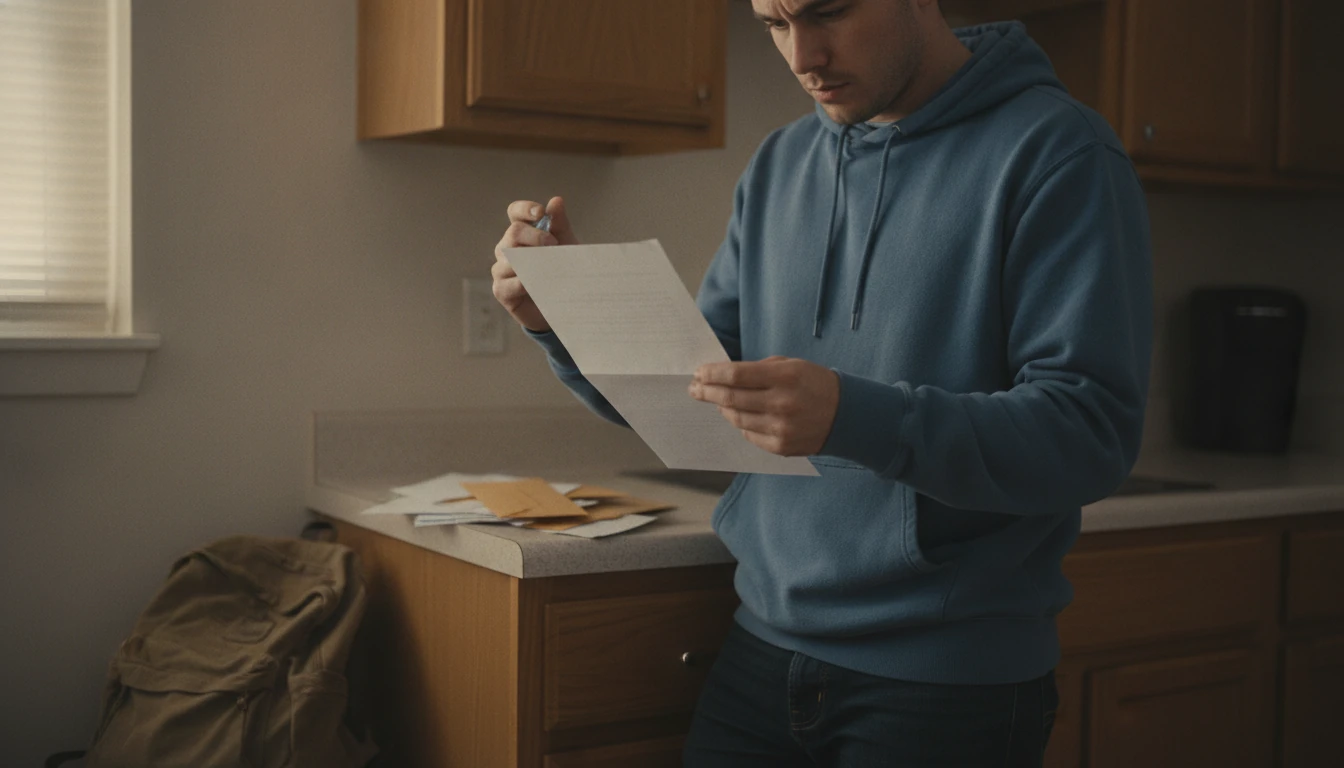
You’re probably holding a piece of paper you don’t understand. It might be a citation with a court date on it, it might be a stack of forms from a loss prevention office in the back of a store, and it might be a detective’s card with a phone number and nothing else. Theft charges Washington is what you typed into a search bar, probably late, probably alone, and probably after everyone else in the house went to bed. The question you asked out loud was whether you’re going to jail. The question underneath it, the one that’s actually keeping you awake, is what this does to your job, your license, and in some cases your ability to stay in this country.
I have spent more than two decades in Pierce County courtrooms, and I can tell you the number on that paper is knowable. Washington sets the degree of a theft charge by the value of the property and by a short list of exceptions that have nothing to do with value at all, and the exceptions are where people get blindsided. Everything below is tied to the statute it comes from so you can read it yourself. The law was read on August 10, 2026.
Table of Contents
- If You Were Just Detained or Cited, Start Here
- What Counts as Theft in Washington, and the Three Degrees
- When a Shoplifting Case Stops Being a Misdemeanor
- The Property Charges That Travel With a Theft Case
- What a First Theft Offense Actually Carries
- What a Theft Defense Actually Attacks
- The Two Bills, and How Theft Cases End Short of Trial
- A Job, a License, and Immigration Status
- When the Theft Case Is Not the Only Case
- Frequently Asked Questions
If You Were Just Detained or Cited, Start Here
Before any of the doctrine, here’s what matters in the first ninety minutes.
- Stop explaining. Intent to deprive is an element the prosecutor has to prove, and an explanation offered to a store employee or an officer usually supplies exactly that. Silence is not an admission of anything.
- You do not have to sign the store’s paperwork. A merchant’s authority to hold you comes from RCW 4.24.220, which permits a detention only on reasonable grounds, in a reasonable manner, and for a reasonable time. Being detained isn’t the same as being obligated to write a statement.
- A detention is not a charge. The prosecutor makes the filing decision later, sometimes weeks later, and the case number you’re waiting on may not exist yet. People sit in that silence assuming nothing is happening.
- Don’t pay the letter that arrives from a collection firm until somebody reads it. It’s a separate civil claim, and paying it doesn’t resolve or prevent the criminal case.
- Find out which court you’re in. A citation written inside the city of Tacoma, a citation from unincorporated Pierce County, and a felony filing all go to different buildings, different judges, and different prosecutors.
Every one of those is unpacked below with the statute sitting behind it.
What Counts as Theft in Washington, and the Three Degrees
There is no crime called shoplifting in Washington. What people mean by shoplifting is charged as theft under chapter 9A.56 RCW, on the same ladder as every other theft in the state, and that ladder carries a lot of traffic. Larceny-theft made up 46.9 percent of the crimes against property that Washington law enforcement agencies reported in 2025, the largest share of any property crime category, according to the Washington Association of Sheriffs and Police Chiefs.
RCW 9A.56.020 defines theft three different ways: wrongfully obtaining or exerting unauthorized control over the property or services of another, obtaining control by color or aid of deception, or appropriating lost or misdelivered property. Each of those requires intent to deprive the owner of the property. That intent element does more work in a theft case than the word theft suggests.
Value is the next question. Under RCW 9A.56.010, value means the market value of the property at the time and in the approximate area of the act, and where value cannot be ascertained under those standards, the property is deemed to be worth not more than $250. So the number that sets your degree is what the item was actually worth on that shelf that day, and it isn’t automatically the number printed on the tag.
| Degree | Value | Class | Statutory maximum | Also lands here regardless of value |
|---|---|---|---|---|
| Theft 3 (RCW 9A.56.050) | $750 or less | Gross misdemeanor | 364 days, $5,000 | 10 or more merchandise pallets or beverage crates |
| Theft 2 (RCW 9A.56.040) | Over $750, up to $5,000 | Class C felony | 5 years, $10,000 | An access device, a public record, or commercial or nonferrous metal with damage in that band |
| Theft 1 (RCW 9A.56.030) | Over $5,000 | Class B felony | 10 years, $20,000 | Property of any value taken from the person of another, a search and rescue dog on duty, or firefighter and EMS equipment whose loss delayed an emergency response |
Figures read from the current statute text on the Washington State Legislature’s site on August 10, 2026.
The first degree statute picked up a new category last year. Substitute Senate Bill 5323, chapter 286 of the 2025 laws, took effect July 27, 2025. It added a provision to theft in the first degree covering property or equipment used by firefighters or emergency medical service providers and taken from a fire station, a fire department vehicle, or an EMS building or vehicle. The provision applies where the loss significantly hindered or delayed an emergency response or the equipment exceeds $1,000 in value. The same bill made the identical addition to possessing stolen property in the first degree, so someone who possessed that equipment without taking it faces the same degree.
Notice what that $1,000 figure is doing. It sits inside the section that otherwise starts at $5,000, which means there’s now a second and much lower dollar line in the same statute.
In my practice the dollar bands are rarely what changes the shape of a case. The triggers that ignore value entirely are.
When a Shoplifting Case Stops Being a Misdemeanor
Under RCW 9A.56.360, a theft from a store is charged as retail theft with special circumstances when one of three facts is present, and the third degree version of that charge is a class C felony even though the underlying theft in the third degree is only a gross misdemeanor. The item’s price never enters into it.
The three triggers, in plain words:
- Leaving the store through a designated emergency exit in order to facilitate the theft.
- Possessing an item designed to overcome security systems, which the statute names as including a lined bag or a tag remover.
- Committing theft at three or more separate stores within a 180 day period.
That’s a felony built on how somebody left a store.
Where that charge lands at sentencing is genuinely unsettled ground. The first and second degree versions are ranked at seriousness levels III and II on the seriousness level table in RCW 9.94A.515, and the third degree version does not appear on that table at all, which under RCW 9.94A.505(2)(b) makes it an unranked felony carrying a determinate sentence of up to one year of confinement. That’s a real gap in the statutory scheme, and it’s worth asking a defense attorney how the courtroom you’re in is handling it right now.
Organized retail theft is the other charge that turns small numbers into felony exposure. RCW 9A.56.350 covers theft of $750 or more from a store with an accomplice, or a cumulative $750 or more taken from one or more stores within 180 days. The first degree version, at $5,000 or more, is a class B felony, and the second degree version is a class C felony.
Subsection (4) of that statute is the part worth reading twice. A series of thefts by the same person can be aggregated into a single count, and thefts committed in different counties can be aggregated and prosecuted in any county where one of them happened.
One more aggregation rule sits in the definitions section rather than in any of the charging statutes. The theft chapter treats three or more thefts from one or more mercantile establishments within a five day period as a single criminal episode, and the values get summed to determine the degree. Four small trips in one week can arrive as one larger case.
The Property Charges That Travel With a Theft Case
These charges turn on two facts more than on value: whether a person was there, and whether a building was entered.
| Charge | Statute | What turns a theft into this | Class |
|---|---|---|---|
| Robbery 2 | RCW 9A.56.210 | Force or fear used against a person to take or keep the property | Class B felony |
| Robbery 1 | RCW 9A.56.200 | Robbery while armed, displaying what appears to be a weapon, inflicting bodily injury, or robbing a financial institution | Class A felony |
| Burglary 2 | RCW 9A.52.030 | Unlawful entry into a building that is not a dwelling, with intent to commit a crime inside | Class B felony |
| Residential burglary | RCW 9A.52.025 | Unlawful entry into a dwelling with that intent | Class B felony |
| Burglary 1 | RCW 9A.52.020 | Burglary while armed with a deadly weapon or assaulting a person | Class A felony |
| Criminal trespass 1 | RCW 9A.52.070 | Knowingly entering or remaining unlawfully in a building, with no intent to commit a crime required | Gross misdemeanor |
| Theft of a motor vehicle | RCW 9A.56.065 | Any motor vehicle, at any value | Class B felony |
| Taking a motor vehicle without permission 2 | RCW 9A.56.075 | Driving or knowingly riding in a vehicle taken without permission | Class C felony |
| Possessing stolen property 1 / 2 / 3 | RCW 9A.56.150 / .160 / .170 | Knowing possession, on the same value ladder as theft | Class B / class C / gross misdemeanor |
| Identity theft 1 / 2 | RCW 9.35.020 | Using another person’s financial information, first degree above $1,500 or where a senior or vulnerable person is knowingly targeted | Class B / class C felony |
Classifications read from the current statute text on the Washington State Legislature’s site on August 10, 2026.
Two things in that table deserve more than a cell. First, the robbery definition in RCW 9A.56.190 says the degree of force is immaterial when force or fear is used to obtain or retain the property or to overcome resistance, which means pushing past a loss prevention employee on the way out the door is the line between a theft charge and a robbery charge. That’s the most common way a shoplifting allegation becomes a class B felony.
Second, theft of a motor vehicle under RCW 9A.56.065 has no dollar threshold whatsoever, so the condition of the car is legally irrelevant.
Details you may not have registered while it was happening can move a case several rungs up this ladder, which is why what happened in those few minutes matters so much this early.
What a First Theft Offense Actually Carries
The number printed in the statute is a ceiling, not a sentence. A felony sentence in Washington is set by a grid that combines the offense’s seriousness level under RCW 9.94A.515 with the person’s offender score under RCW 9.94A.525, and a person with no prior felony convictions starts that calculation at zero.
| Charge | Seriousness level | Standard range with no criminal history | Statutory maximum |
|---|---|---|---|
| Theft 2 | I | 0 to 60 days | 5 years |
| Theft 1 | II | 0 to 90 days | 10 years |
| Possessing stolen property 1 | II | 0 to 90 days | 10 years |
| Theft of a motor vehicle | II | 0 to 90 days | 10 years |
| Organized retail theft 2 | II | 0 to 90 days | 5 years |
| Burglary 2 | III | 1 to 3 months | 10 years |
| Organized retail theft 1 | III | 1 to 3 months | 10 years |
| Residential burglary | IV | 3 to 9 months | 10 years |
| Robbery 2 | IV | 3 to 9 months | 10 years |
| Robbery 1 | IX | 31 to 41 months | life |
Seriousness levels from RCW 9.94A.515 and ranges from Table 1 of RCW 9.94A.510 at an offender score of zero, read August 10, 2026.
Washington also writes a sentencing alternative directly into the code. RCW 9.94A.650, the first-time offender waiver, applies to a person who has never been convicted of a felony in this state, in federal court, or in another state and whose current offense is not a violent offense, not a sex offense, and not one of the listed drug or DUI offenses. For an eligible person, the court may waive a sentence within the standard range and instead impose up to 90 days of confinement along with community custody and financial conditions. Most theft family felonies are not on the violent offense list, which is why the waiver belongs in the conversation early rather than at sentencing.
I’d rather you hear the next part from me than find it out in a hallway. None of this grid applies to theft in the third degree. A gross misdemeanor has no seriousness level and no standard range, so a judge in Tacoma Municipal Court or Pierce County District Court is working inside 364 days of discretion with nothing structuring it. The ceiling on the misdemeanor sits above the first offense standard range for several of the felonies listed above. That’s a reason to stop treating a gross misdemeanor as the version of this that takes care of itself, not a reason to prefer a felony.
What a Theft Defense Actually Attacks
A theft case is built on a small number of things the state has to prove, and each one is a separate place to push.
- Intent to deprive. Every means of committing theft requires it. An item under a jacket in a cart is a fact. Intent is an inference drawn from facts, and inferences are contestable.
- Value. The market value rule above sets the number at what the property was worth at the time and place of the act, and where value cannot be ascertained the statute deems it not to exceed $250. The difference between $740 and $760 is the difference between a gross misdemeanor and a felony.
- A good faith claim of title. RCW 9A.56.020(2) makes it a sufficient defense that the property was appropriated openly and avowedly under a claim of title made in good faith, even though the claim be untenable. That’s the roommate, the former partner, the contractor and the tools, the co-owned furniture in a household coming apart.
- Knowledge, on a possessing stolen property charge. RCW 9A.56.140 requires actual knowledge that the property was stolen, and that knowledge has to be proven like anything else.
Each of those is a part of the accusation the state agreed to prove when it filed the case.
The stop itself is worth pinning down early too. RCW 4.24.220 gives a merchant immunity only where there were reasonable grounds and the detention was reasonable in manner and duration, so how long you were held, where, by whom, and what was said are facts worth capturing while the footage still exists and memories are fresh.
Now the honest limit of all of this. In a great many theft cases the state can prove the elements, and the fight is about the degree, the value the state assigns, the record the case leaves behind, and what a resolution costs a person in money and in time. Telling you otherwise would be selling you something.
The Two Bills, and How Theft Cases End Short of Trial
The letter usually arrives before anything else does. It comes on a law firm’s letterhead or from a collection agency, it names a dollar figure, and it doesn’t come from the court.
That letter is a civil claim, and it has its own statute. RCW 4.24.230 allows a store to demand the retail value of the merchandise up to $2,850 from an adult, plus an additional penalty of not less than $100 and not more than $650, plus the store’s reasonable attorney fees and court costs.
Where the person is an unemancipated minor, the parent or legal guardian carries the same structure with the merchandise figure capped at $1,425. Under subsection (4), a criminal conviction is not a condition precedent to that claim, so the store can pursue it whether or not charges are ever filed.
The statute requires the demand letter itself to carry a notice, boldly and conspicuously: “The payment of any penalty demanded of you does not prevent criminal prosecution under a related criminal provision.” Read that sentence twice. Paying the store doesn’t close the criminal case, and the legislature made the store tell you so in writing.
Criminal restitution is the other bill, and it lives in a different forum entirely. Under RCW 9.94A.753, restitution is ordered whenever an offense results in injury to a person or damage to or loss of property, absent extraordinary circumstances. The amount is set at sentencing or within 180 days, it cannot exceed double the offender’s gain or the victim’s loss, and for offenses committed on or after July 1, 2000 the court keeps jurisdiction until the obligation is paid in full with no time limit. Two obligations, two forums, and neither one cancels the other.
As for how these cases end short of trial, there’s a limited and specific set of mechanisms in Washington law.
- Civil compromise. RCW 10.22.010 and RCW 10.22.020 provide that where the injured party appears in court before final judgment and acknowledges in writing that satisfaction has been received, the court may, in its discretion and on payment of costs, discontinue the proceedings and discharge the defendant, and a discharge bars a later prosecution for the same offense. Three caveats belong with that. The discretion belongs to the judge and not to the store. The statute excludes domestic violence offenses, offenses committed against an officer in the execution of duty, and offenses committed with intent to commit a felony. And the statute is written in terms of a misdemeanor, which leaves an open question about how it applies to a gross misdemeanor like theft in the third degree, so ask your attorney how your court treats it rather than assuming it is available.
- The first-time offender waiver under RCW 9.94A.650, on the felony side, described above.
- Deferred prosecution under chapter 10.05 RCW. Let me be direct about this one, because it gets described as a theft diversion program and it isn’t. RCW 10.05.020 requires the petitioner to allege under oath that the charged conduct was caused by a substance use disorder, a mental health disorder, or a domestic violence behavior problem for which the person needs treatment, and RCW 10.05.150 commits an accepted petitioner to a two year period of abstinence, treatment, weekly counseling for at least six months, and monthly contact after that.
- A negotiated resolution in the charging court, which in this county means Tacoma Municipal Court, Pierce County District Court, or Pierce County Superior Court depending on where the conduct happened and what was filed.
One thing I won’t pretend to know for you. Washington has no statewide statute or court rule creating a stipulated order of continuance or a general pretrial diversion agreement in courts of limited jurisdiction. Where those things exist they’re local practice and local prosecutor policy, which means what’s available to you depends on the specific courtroom your case landed in, and it has to be confirmed there rather than assumed from a web page.
A Job, a License, and Immigration Status
A conviction is a public court record, and it stays one unless and until a court vacates it. That’s true of a gross misdemeanor as much as it is of a felony.
The consequences worth naming plainly are these:
- A professional licensing body may require you to disclose it and may run its own review on its own timeline.
- After a felony conviction, possessing a firearm becomes a separate crime under RCW 9.41.040, which reaches any felony not already listed in the first degree subsection.
- For a person who is not a United States citizen, the federal categories below can be triggered.
Two federal provisions do the work in the immigration context. Under 8 U.S.C. 1101(a)(43)(G), a theft offense, including receipt of stolen property, or a burglary offense is an aggravated felony where the term of imprisonment is at least one year. Under 8 U.S.C. 1227(a)(2)(A)(i), a person convicted of a crime involving moral turpitude committed within five years after the date of admission, for which a sentence of one year or longer may be imposed, is deportable.
One detail of Washington law sits directly against those federal lines. RCW 9.92.020 caps a gross misdemeanor at 364 days, which is one day below the one year figure the federal provisions use.
Melvin & Torrone, PLLP does not practice immigration law, and this section states general federal categories and nothing further. It does not tell you how any particular charge, plea, or sentence in your case would be treated. If you’re not a United States citizen, retain an immigration attorney and do it before you enter any plea, not after.
When the Theft Case Is Not the Only Case
If the person accused is under 18, the case runs on a separate track under chapter 13.40 RCW in juvenile court, with its own filing rules and its own diversion structure, and that process is covered in full in our juvenile defense article. The one fact that belongs here rather than there is that under RCW 4.24.230(2), the parent or legal guardian of an unemancipated minor carries the store’s civil claim up to $1,425 regardless of how the juvenile case is handled.
The other overlap is the one that rarely comes up in a first consultation unless I ask about it. A theft or property allegation that comes out of a shared household, a separation, or a fight over who owned what runs alongside a family law file, and the two proceedings use different standards of proof and different rules about what a person can be asked and when. Here’s the composite pattern I have watched play out more than once. A dispute over property removed from a home during a separation produces both a theft referral and a motion in the family case in the same month, and an explanation written to settle the family side becomes a statement sitting in the criminal file. So tell whoever is defending the theft case about every open family matter at the first meeting, before anyone files anything.
Frequently Asked Questions
Will I go to jail for a first shoplifting charge in Washington?
Nobody can answer that from a web page, and the reason is worth knowing: with no standard range to anchor a gross misdemeanor, the answer turns partly on which courtroom the case lands in. A stop inside the city goes to Tacoma Municipal Court. Unincorporated Pierce County and several contract cities go to Pierce County District Court. Lakewood, Puyallup, and other cities run their own municipal courts. Each has its own prosecutor, its own calendar, and its own practices on a first offense.
Do I have to pay the letter the store’s law firm sent me?
Not before somebody reads it against the criminal case. Under RCW 4.24.230(3), judgments and claims arising under that section may be assigned, which is why the demand so often arrives from a collection firm rather than from the store you were standing in. What gets paid, when, and how it’s characterized can matter to the criminal side, so the two should be looked at together rather than answered separately.
Can a theft conviction be removed from my record in Washington?
Washington vacates convictions rather than expunging them. RCW 9.96.060 sets a three year waiting period for a misdemeanor or gross misdemeanor after all terms of the sentence are complete, and five years for a domestic violence offense. On the felony side, RCW 9.94A.640 sets five years for a class C felony and ten years for a class B felony. Pending charges and unpaid legal financial obligations are disqualifying. A conviction vacated on or after July 28, 2019 still counts as criminal history for repeat offense charging. RCW 9.94A.640 was also amended in 2025, so you’ll want to check eligibility against the current text rather than an older summary. Our record vacation page covers the process in more detail.
What is the difference between theft and burglary in Washington?
Burglary does not require that anything was taken. It requires an unlawful entry with intent to commit a crime inside, and the reason it gets charged in cases where nothing left the building is RCW 9A.52.040, which permits the trier of fact to infer that intent from the unlawful entry itself, unless the entering or remaining is explained by evidence the fact finder finds satisfactory. The inference is rebuttable, but it means the state does not have to independently prove which crime was intended.
My teenager was caught shoplifting. Is that the same process?
No. It runs under chapter 13.40 RCW in juvenile court, which has different filing rules, different hearings, and a diversion structure that doesn’t exist on the adult side. Our juvenile defense article walks through that process. One thing worth knowing on top of it: a parent’s civil exposure under RCW 4.24.230(2) is a separate matter that proceeds on its own regardless of how the juvenile case is resolved.
Before You Do Anything Else
Nothing you were handed says when the prosecutor decides what to file, and that silence is where people do themselves the damage. An explanation offered to a store employee or an officer tends to supply the intent element the state has to prove. A civil demand letter paid quickly to make it go away does not resolve or prevent the criminal case. Both are hard to undo, and neither one has a deadline pushing you through it.
What to put together in the next 48 hours
- Photograph everything you were handed, front and back, including the citation and any paperwork from the store.
- Keep the civil demand letter, note the date it arrived, and hold it until somebody’s read it with you.
- Write down what happened while it’s fresh, including who spoke to you, what was said, and how long you were held.
- Find out which court your citation names, because a Tacoma city citation, a Pierce County citation, and a felony filing go to three different buildings.
What to ask us
- Given the value involved, which degree is this likely to be charged as?
- Is the first-time offender waiver something a situation like mine could reach?
- What does the civil letter actually obligate me to do, separately from the criminal case?
Bring all of it, including the letter, to a free 30-minute review. Bring it before the filing decision if you can, because that’s the stretch where there’s still something to shape.
Any scenario described in this article is a composite and does not depict any actual client or case. This is attorney advertising. This article provides general legal information, not legal advice, and it is not a substitute for consultation with an attorney about your specific situation. Reading this article does not create an attorney-client relationship with Melvin & Torrone, PLLP. Every situation is different, and the law changes.
About the Author
Chris Torrone is a founding partner of Melvin & Torrone, PLLP, in Tacoma. The firm was formed from the merger of an established criminal defense practice and an established family law practice, which is why both sit under one roof here. It serves clients across Pierce, Kitsap, Thurston, and Lewis counties from an office at 950 Pacific Avenue, Suite 720. He has practiced in Pierce County courtrooms for more than two decades.
Sources
- RCW 9A.56.020, Theft, definition and defense
- RCW 9A.56.010, Theft chapter definitions, including value and aggregation
- RCW 9A.56.030, Theft in the first degree
- RCW 9A.56.040, Theft in the second degree
- RCW 9A.56.050, Theft in the third degree
- Substitute Senate Bill 5323, chapter 286, Laws of 2025, session law
- RCW 9A.56.140, Possessing stolen property, definition and defense
- RCW 9A.56.150, Possessing stolen property in the first degree
- RCW 9A.56.160, Possessing stolen property in the second degree
- RCW 9A.56.170, Possessing stolen property in the third degree
- RCW 9A.56.350, Organized retail theft
- RCW 9A.56.360, Retail theft with special circumstances
- RCW 9A.56.065, Theft of a motor vehicle
- RCW 9A.56.075, Taking a motor vehicle without permission in the second degree
- RCW 9A.56.190, Robbery, definition
- RCW 9A.56.200, Robbery in the first degree
- RCW 9A.56.210, Robbery in the second degree
- RCW 9A.52.020, Burglary in the first degree
- RCW 9A.52.025, Residential burglary
- RCW 9A.52.030, Burglary in the second degree
- RCW 9A.52.040, Inference of intent in a burglary prosecution
- RCW 9A.52.070, Criminal trespass in the first degree
- RCW 9.35.020, Identity theft
- RCW 9A.20.021, Maximum sentences for felonies
- RCW 9.92.020, Gross misdemeanor maximum punishment
- RCW 9.41.040, Unlawful possession of a firearm
- RCW 9.94A.505, Sentences, general procedure
- RCW 9.94A.510, Table 1, sentencing grid
- RCW 9.94A.515, Table 2, crimes included within each seriousness level
- RCW 9.94A.525, Offender score
- RCW 9.94A.650, First-time offender waiver
- RCW 9.94A.753, Restitution
- RCW 4.24.220, Merchant detention immunity
- RCW 4.24.230, Civil liability for shoplifting
- RCW 10.22.010, Compromise of misdemeanor, when permitted
- RCW 10.22.020, Compromise of misdemeanor, procedure
- RCW 10.05.020, Deferred prosecution, petition and eligibility
- RCW 10.05.150, Deferred prosecution, treatment period
- RCW 9.96.060, Vacating a misdemeanor or gross misdemeanor conviction record
- RCW 9.94A.640, Vacating a class B or class C felony conviction record
- 8 U.S.C. 1101, Definitions, including aggravated felony
- 8 U.S.C. 1227, Deportable aliens
- Pierce County Superior Court, Pierce County District Court, and Tacoma Municipal Court directory
- Washington Association of Sheriffs and Police Chiefs, Crime in Washington 2025 Annual Report release, August 3, 2026

Chris Torrone
Founding Partner, Melvin & Torrone PLLP
Chris Torrone is a dedicated advocate for clients facing family crises and criminal charges. With 20 years of experience practicing in Pierce County courts, Chris has built a reputation for meticulous case preparation and creative problem-solving in high-stakes litigation.